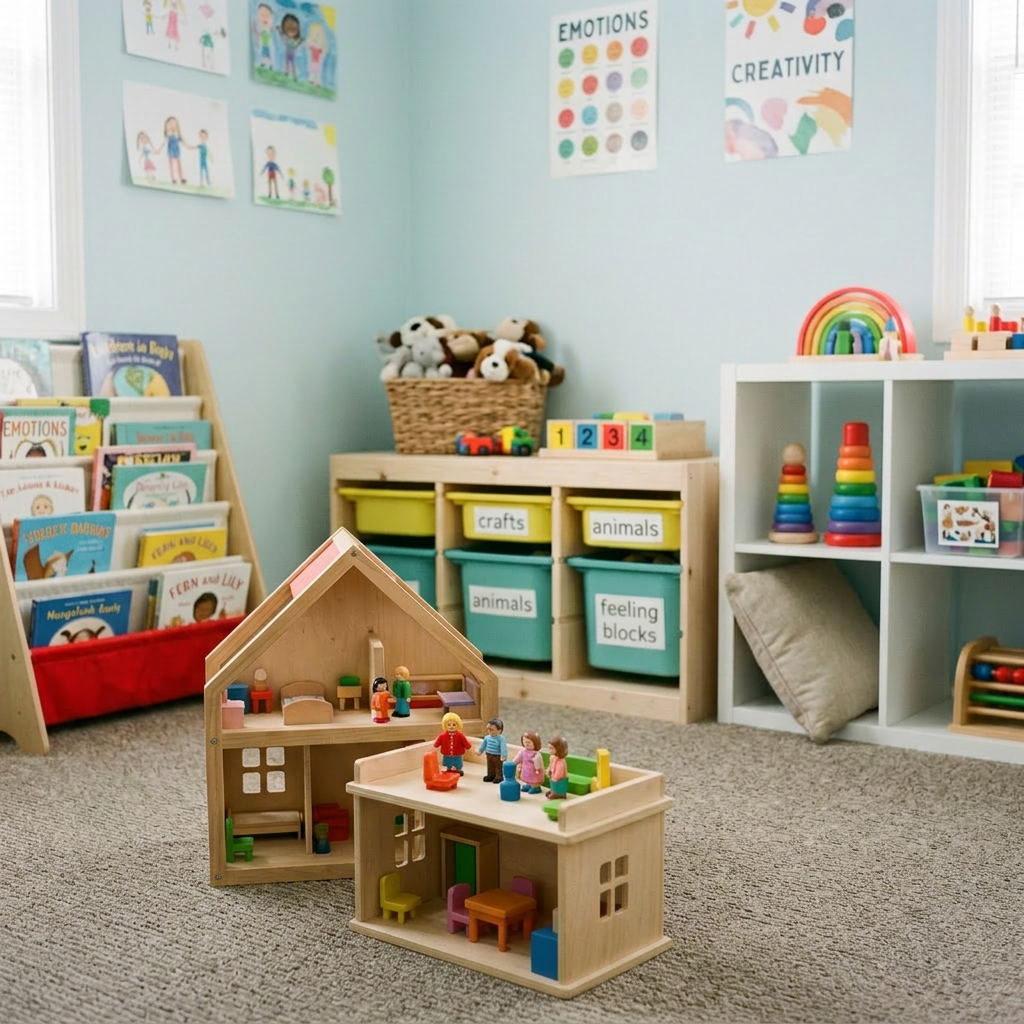
My Child Just Plays in Therapy—How Does That Help?
One of the most common questions I hear from parents is:
“My child comes home and tells me they just played. How is that therapy?”
It’s a fair question. As adults, we’re used to talking through our problems. If we’re stressed, overwhelmed, or struggling with something, we might sit down with a friend, family member, or therapist and explain what’s going on.
Children are different.
Many children don’t yet have the words, emotional awareness, or confidence to explain their feelings the way adults do. They may know they’re angry, worried, sad, frustrated, or confused, but putting those experiences into words can be difficult.
That’s where play comes in.
Play Is a Child’s Language
Children naturally express themselves through play. While adults communicate through conversation, children often communicate through stories, imagination, games, art, movement, and play.
Think about how often children reenact experiences while playing. A child who is nervous about school might repeatedly play “teacher.” A child struggling with a friendship may act out conflicts between toys. A child experiencing anxiety might create scenarios where characters need protection or rescue.
Play gives children a safe way to explore feelings, experiences, and challenges without having to explain everything directly.
It May Look Like Play, But There’s Purpose Behind It
During play therapy, children are not simply being entertained.
The toys, activities, and interactions are carefully chosen to support emotional growth, self-awareness, coping skills, and problem-solving.
While a child is playing, they may be:
- Learning how to identify and express emotions
- Practicing emotional regulation skills
- Building confidence and resilience
- Working through fears and worries
- Developing problem-solving abilities
- Exploring relationships and social skills
- Processing difficult experiences in a safe environment
To an outside observer, it may look like “just playing.” Underneath, important therapeutic work is happening.
Change Often Happens Slowly
Many parents hope their child will come home from therapy and immediately talk about what they learned.
Sometimes that happens.
More often, the changes show up gradually in everyday life.
You might notice:
- Fewer emotional outbursts
- Better frustration tolerance
- Increased confidence
- Improved friendships
- Greater ability to talk about feelings
- More willingness to try new things
- Better coping during stressful situations
These small changes often indicate meaningful progress.
Trust Takes Time
For many children, one of the most important parts of therapy is developing a safe and trusting relationship with their therapist.
Before children can explore difficult feelings, they need to know they are accepted, understood, and emotionally safe.
Sometimes what looks like “just playing” is actually a child building trust, practicing connection, and learning that they don’t have to manage big feelings alone.
What Parents Can Do
One of the best things parents can do is trust the process and stay curious.
Instead of asking:
“What did you talk about in therapy?”
Try asking:
“What was your favourite part of today?”
or
“Did anything make you smile today?”
Children are often more willing to share when they don’t feel pressured to provide details.
The Bottom Line
Play therapy works because it meets children where they are.
Children don’t process the world the same way adults do, and they don’t always communicate through words. Play provides a natural, developmentally appropriate way for children to explore emotions, build confidence, strengthen coping skills, and work through challenges.
So if your child comes home and says, “We just played,” that’s often a sign that therapy is happening exactly the way it should.
Behind every game, story, drawing, and imaginative adventure, important emotional work may be taking place.

 heylittlehuman
Leave a comment